Sign up for Silverstream Communications

Get regular news updates and customer insights on how ALS is transforming maritime efficiency.


China Is Driving the Future of Green Shipping

As Chief Regional Officer – Asia at Silverstream Technologies, Julian Zhu is leading the company’s expansion across one of the most dynamic maritime markets in the world. In this conversation, he discusses China’s accelerating push toward decarbonisation, the sectors offering the strongest growth potential and how energy efficiency technologies such as air lubrication are becoming essential tools in the transition to greener shipping.

The Year of the Horse symbolises energy, drive and forward momentum. What are your key priorities for Silverstream in China in the year ahead?

Our first priority is to further deepen cooperation with both shipowners and shipyards across China in order to deliver advanced energy-efficiency solutions to the market. At the same time, we are strengthening our local capabilities in China. This includes expanding aftermarket service capacity and further developing our data and digital capabilities. Artificial intelligence will increasingly support the processing and interpretation of vessel performance data, allowing operators to better understand how efficiency technologies perform in real operations. By combining strong local partnerships with advanced digital tools, we aim to accelerate adoption of energy-saving technologies throughout the region.

China’s maritime and shipping sectors are evolving rapidly. What major developments will most influence the market over the next three to five years?

Two major trends will shape the industry: the rapid development of green energy solutions and the growing role of autonomous technologies, both strongly supported by China’s national strategy. China has shown strong commitment to maritime decarbonisation, with major investments in alternative fuels, port infrastructure and next-generation vessels. In many ways, the country is emerging as a global leader in green shipping and maritime technologies. This is not a distant future scenario; the transformation has already begun and will continue to accelerate over the coming years.

Decarbonisation remains a central industry focus. What role do you see Silverstream playing in supporting China’s sustainability ambitions?

Silverstream’s technology plays an important, complementary role in the transition to greener shipping. Our air lubrication systems are fuel-agnostic, meaning they deliver efficiency gains regardless of whether vessels are powered by conventional fuels, LNG, methanol, hydrogen or other alternatives. This is particularly important because many alternative fuels are significantly more expensive than traditional fuels. Improving energy efficiency therefore becomes essential to making the economics of decarbonisation work for shipowners. Our systems typically deliver fuel savings of around 5–10%, independently verified through operational performance data. By reducing fuel consumption and energy demand, we help make decarbonisation strategies more practical and economically viable. In that sense, Silverstream acts as an enabling technology that supports China’s broader ambition to build a cleaner and more sustainable maritime sector.

In which industry sectors do you see the greatest opportunities for growth in China?

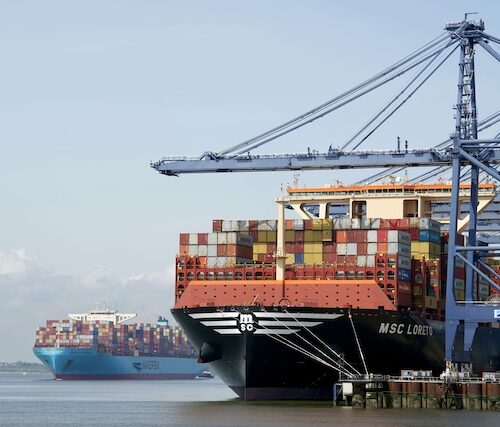
Large Containerships will remain the dominant market segment. China is home to some of the world’s leading container shipping companies and many of the biggest vessels in operation today. Because the efficiency benefits of air lubrication increase with hull surface area, these ships represent a particularly attractive market for both retrofit installations and newbuild projects.

Beyond Containerships, which other segments are becoming increasingly important?

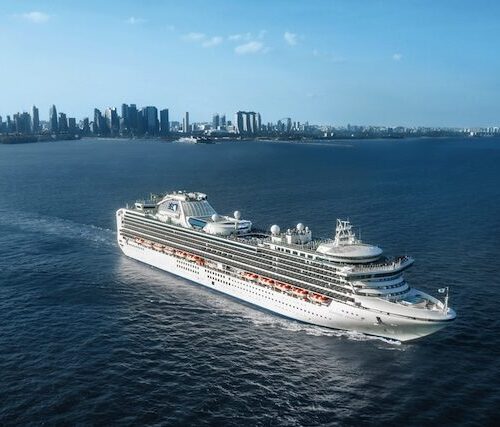
Several other vessel segments are expanding rapidly across China and the wider Asian market. The cruise sector is entering a strong growth phase, with China expected to become one of the world’s largest cruise markets within the next decade as passenger numbers rebound and more ships are deployed in the region. The Ro-Pax ferry market across China and Asia is also growing, supported by fleet renewal programmes, rising regional passenger transport and increasingly strict environmental regulations. At the same time, the strongest expansion is taking place in the PCTC segment, driven by China’s booming automotive exports. The global PCTC orderbook now represents around 35% of the existing fleet, one of the highest ratios in shipping, with many of these vessels being built in Chinese shipyards to support growing export flows. i

As these sectors expand and vessels become larger and more energy-intensive, the value of efficiency technologies increases significantly, creating strong long-term potential for our solutions across multiple ship types.

How does the China market differ from other regions in terms of customer expectations and speed of technology adoption?

One of the most distinctive features of the Chinese market is the clarity of its strategic direction. Government policy sets ambitious targets for technological leadership, sustainability and industrial development, and these objectives strongly influence the maritime sector. When Chinese shipowners are convinced that a technology delivers real value, adoption can happen very quickly. At the same time, customer expectations are extremely high. Shipowners want clear evidence of performance, measurable energy savings and a strong return on investment. This is one of the reasons we established a strong local presence in Shanghai. Being close to shipyards, shipowners and operators allows us to respond faster, support projects more efficiently and build stronger partnerships with customers in the region.

_____________________________________

i https://maritimecompass.com/2024/06/28/booming-car-carrier-market-poised-for-major-expansion/?utm_source=chatgpt.com

Silverstream secures two Finnlines newbuild ro-pax orders

Silverstream has secured an order from Finnlines to install its air lubrication technology, the Silverstream® System, on two environmentally friendly newbuild ro-pax vessels, the first of which is starting to be built this summer at China Merchants Nanjing Jinling Shipyard (Weihai). 

The Silverstream® System will reduce fuel consumption and associated emissions on the two new design flagship Superstar vessels. The two 235m vessels, which have a capacity of 5,100 lane metres and will carry up to 1,100 passengers, will be delivered by 2023 to operate between Finland and Sweden across the Baltic Sea. 

Choosing the Silverstream® System will further improve the environmental credentials of the Superstar class ro-pax vessels, creating a new benchmark for what is already possible in terms of vessel design in the segment. The technology will exist alongside a suite of measures on the vessels to reduce environmental impact and improve passenger comfort. 

The Silverstream® System uses a series of air release units (ARUs) in the flat bottom of a vessel to generate a rigid carpet of microbubbles that travel the full length of the hull. Silverstream has already begun manufacturing the air release units (ARUs) for the two Superstar vessels and will start working with China Merchants Nanjing Jinling Shipyard to install the technology onboard. 

Speaking on the announcement, Noah Silberschmidt, CEO, Silverstream Technologies, said: “We are proud to unveil the part that Silverstream is going to play to make Finnlines’ Superstar ropax vessels the most advanced passenger-freight ships on the market today. We are excited to get to work on installing our technology onboard these cutting edge vessels.

“Navigating the complexities of international supply chains – particularly as we continue to emerge from the COVID-19 pandemic – requires strong partnerships and collaboration. The team at Silverstream is eager to collaborate once again with our long-term partners at Grimaldi Group and China Merchants Group to not only execute a successful project but push the boundaries for efficient vessel design.”

Emanuele Grimaldi, CEO, Finnlines, said: “We are constantly renewing and developing our fleet, and the upcoming three hybrid ro-ros, as well as two eco-sustainable Superstar ro-paxes, are a next step in the evolution of Finnlines’ fleet. These new vessels will increase our cargo and passenger capacity significantly and, together with our connections, we can meet the needs of our customers better – in a sustainable and responsible way.”

Mikael Lindholm, Head of Newbuilding Department, Finnlines, added: “Finnlines has chosen Silverstream Technologies based on their extensive experience, since they have invested significantly in research and development. We look forward to collaborating with them in future.”

The announcement follows the recent completion of trials of the Silverstream® System on another Grimaldi Group newbuild ro-ro vessel, the Eco Valencia. Fuel and emissions savings of 5.1% were recorded during ALS testing on the Grimaldi Green 5th Generation ro-ro carrier. Silverstream continues to progress with installations across the rest of Grimaldi’s GG5G fleet. 

Silverstream completes trials of the Silverstream®System on Grimaldi Group’s Eco Valencia ro-ro 

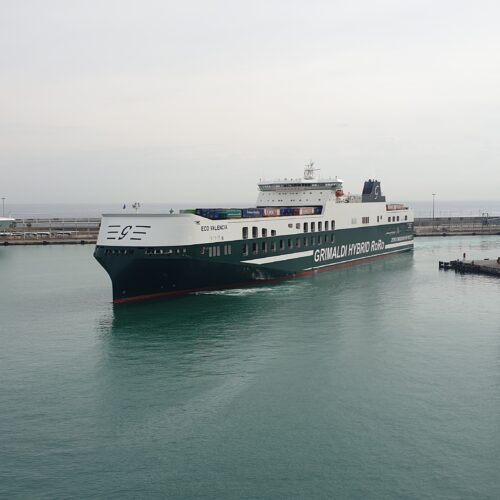
Silverstream has announced  that its pioneering air lubrication system, the Silverstream® System, has demonstrated significant fuel and emissions savings during testing on Grimaldi Group’s newbuild ro-ro vessel Eco Valencia.Savings figures of 5.1% have been measured during initial performance testing, which has taken place continuously since the Eco Valencia entered service in the Mediterranean. During this process, the Silverstream® System was comprehensively tested at various vessel speeds and in a range of sea states, to calculate and prove fuel and emissions savings. 

The technology, which produces a thin layer of micro-bubbles over the flat bottom of the hull, is an integral part of the new vessel’s portfolio of emissions and fuel reduction measures. Air lubrication reduces the frictional resistance between the water and the hull, improving operational and environmental efficiencies. 

Eco Valencia is the first of 9 Grimaldi Green 5th Generation (GG5G) designs to be installed with the technology. Four vessels with the System onboard have already been built at China Merchants Group Limited’s Jinling Shipyard: Eco Valencia, Eco Barcelona, Eco Livorno and Eco Savona. 

Speaking on the trial completion and the savings figure, Noah Silberschmidt, CEO, Silverstream Technologies, said: “We are delighted to have reached this latest milestone in our continued partnership with Grimaldi Group. The recorded savings figure of 5.1% exceeded initial predictions and shows that Grimaldi’s vision to install our air lubrication technology as a fuel and emissions reduction solution has paid off. 

“We would like to thank Grimaldi for their continued confidence in the Silverstream® System. We are proud that our technology plays a central role in these pioneering environmentally friendly ship designs. We look forward to testing further Systems on the GG5G fleet, starting with Eco Barcelona, in the coming weeks.” 

Silberschmidt added: “We are particularly pleased to have been able to complete this trial despite the obvious challenges to international travel and supply chains posed by the COVID-19 pandemic. This is testament to the commitment and skills of our team at Silverstream and the strength of our partners, all of which have been vital to ensuring we can continue to support shipowners with their sustainability ambitions. 

“All of this takes place against the backdrop of impending vessel efficiency requirements, such as the IMO’s proposed Energy Efficiency Existing Ship Index (EEXI), which further amplifies the central role that clean technologies must have within shipping’s decarbonisation pathway. We are proud to support progressive owners and operators like Grimaldi in future-proofing themselves against new requirements.” 

Alberto Portolano, Project Manager of AirLub Design and Integration, Grimaldi Group said: “The successful trial of the Silverstream® System and the CO2 reduction that it generates is an important step in Grimaldi Group’s aim to lead on shipping sustainability. The trials conducted with the ship in fully loaded service showed the air bubbles covering the entire hull bottom. We are looking forward to continuing to work closely with Silverstream to benefit from their technology on more of our market-leading ro-ro vessels.” 

The GG5G ro-ro carriers are some of the most advanced ship designs currently on the market. The hybrid propulsion system helps them produce zero emissions in port, and the addition of clean technologies, like the Silverstream® System, further positions them as the eco-ships of the future. 

As well as the 9 vessels contracted to be built for Grimaldi Group with the Silverstream® System installed, Silverstream is also installing Systems on Grimaldi Group subsidiary Finnlines’ 3 newbuild GG5G ro-ro vessels and 2 newly ordered ro-pax vessels. 


Grimaldi Group chooses Silverstream air lubrication for new paradigm of green vessels

Silverstream Technologies, the pioneers of air lubrication technology for the shipping industry, have signed a major new deal with Italian shipowner Grimaldi Group SpA, the company announced today. 

The agreement will see the Silverstream® System, Silverstream’s proprietary air lubrication technology, installed on 12 cutting-edge, hybrid RoRo vessels that are being built over the next three years. 

The technology, which produces a thin layer of micro-bubbles for the flat bottom of the vessel, will be an integral part of the new design’s portfolio of emissions and fuel reduction measures. Air lubrication reduces the frictional resistance between the water and the hull, improving operational and environmental efficiencies. Silverstream expects that the system, which will last the lifetime of the new vessels, will reduce fuel consumption and associated emissions. Additionally, the Silverstream® System has been designed to provide continuous reliable performance and is simple to operate and maintain. 

Grimaldi’s Green 5th Generation (GG5G) vessel project was conceived over the last year in conjunction with Danish naval architect Knud E Hansen. The vessels will emit zero emissions in port following the installation of lithium batteries, and, in addition to Silverstream’s technology, will also be fitted with solar panels and scrubbers to further reduce emissions. 

Emanuele Grimaldi, Managing Director, Grimaldi Group said: “I am pleased that the Silverstream® System will form the centrepiece of our pioneering new Ro-Ro vessels. The GG5G project always set out to create a new paradigm in ship design and demonstrate to the whole industry what is possible in terms of driving sustainability with proven solutions already on the market. In signing this deal with Silverstream we have shown that a more sustainable future for shipping is not just possible, but closely within our grasp.” 

Dario Bocchetti, Head of Corporate Energy Saving and Innovation Department at Grimaldi, commented: “Grimaldi’s commitment to sustainability is unparalleled within the shipping industry. This deal with Silverstream demonstrates that the time for innovative solutions to shipping’s problems is upon us. The reduction of fuel costs and associated emissions is central to Grimaldi’s aims as a progressive, forward-thinking company, and we are extremely pleased that Silverstream will help us fulfil those goals.” 

Noah Silberschmidt, CEO, Silverstream Technologies said: “This agreement marks an important milestone in the continued proliferation of air lubrication technology in the shipping industry. With major environmental regulatory challenges on the horizon, it is important to see key players like Grimaldi stepping forward and proving that solutions to reduce fuel costs and emissions are already available on the market. We believe that this deal has thrown down the gauntlet for other shipowners, and sends a message that real savings can be realised through the application of credible and proven clean technologies.” 

The Grimaldi Group expects the first of the new vessels to be completed in May 2020 and become operational by Q3 2020 on Mediterranean ro/ro trade routes.